

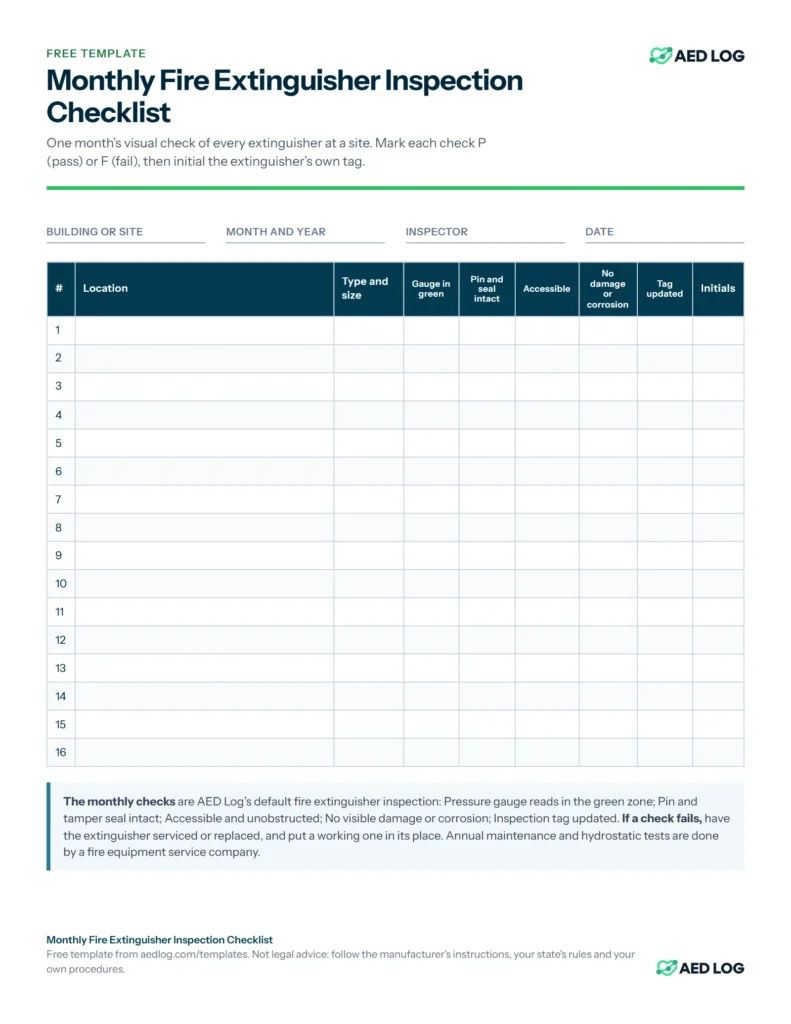
The monthly fire extinguisher inspection checklist
The monthly check has five points: the pressure gauge, the pin and tamper seal, access, damage and corrosion, and the inspection tag. OSHA requires portable extinguishers to be visually inspected every month (29 CFR 1910.157(e)(2)).
| Check | What to look for |
|---|---|
| 1. Pressure gauge reads in the green zone | On stored-pressure extinguishers, the needle sits in the green operable range. |
| 2. Pin and tamper seal intact | The pull pin is in place and the tamper seal isn’t broken or missing. |
| 3. Accessible and unobstructed | The extinguisher is in its place, mounted and visible, with nothing in front of it. |
| 4. No visible damage or corrosion | No dents, rust, cracks, leaks or blockages, and the label is legible and facing out. |
| 5. Inspection tag updated | The tag is initialed and dated for this month. |
The monthly check is a visual one that any trained employee can do. Annual maintenance and hydrostatic tests are different jobs, usually done by a fire equipment service company. The fire extinguisher inspection requirements guide covers all three.
The fire extinguisher inspection log
Page 2 is a 12-month log for a single extinguisher: a row per month for the date, a tick for each check that passes, initials and notes, under its type, size and maintenance dates.

OSHA requires the date of each annual maintenance to be recorded and kept for one year after the last entry or the life of the shell, whichever is less (1910.157(e)(3)). The log keeps that date beside the monthly checks, so one sheet shows the extinguisher’s whole year. To keep the record on the extinguisher itself, print our fire extinguisher inspection tag.