
Stop the Bleed kits
Stop the Bleed Kit Tracking: Inspections, Contents and Expirations
AED Log tracks every Stop the Bleed kit you own, from Stop the Bleed kits for schools to the Stop the Bleed AED kit stored beside each defibrillator. It records each kit's contents and expiration dates, runs a quarterly inspection and warns you before anything inside expires.
45 days free. No credit card required. Then plans from $114 a year.
What you track in each Stop the Bleed kit
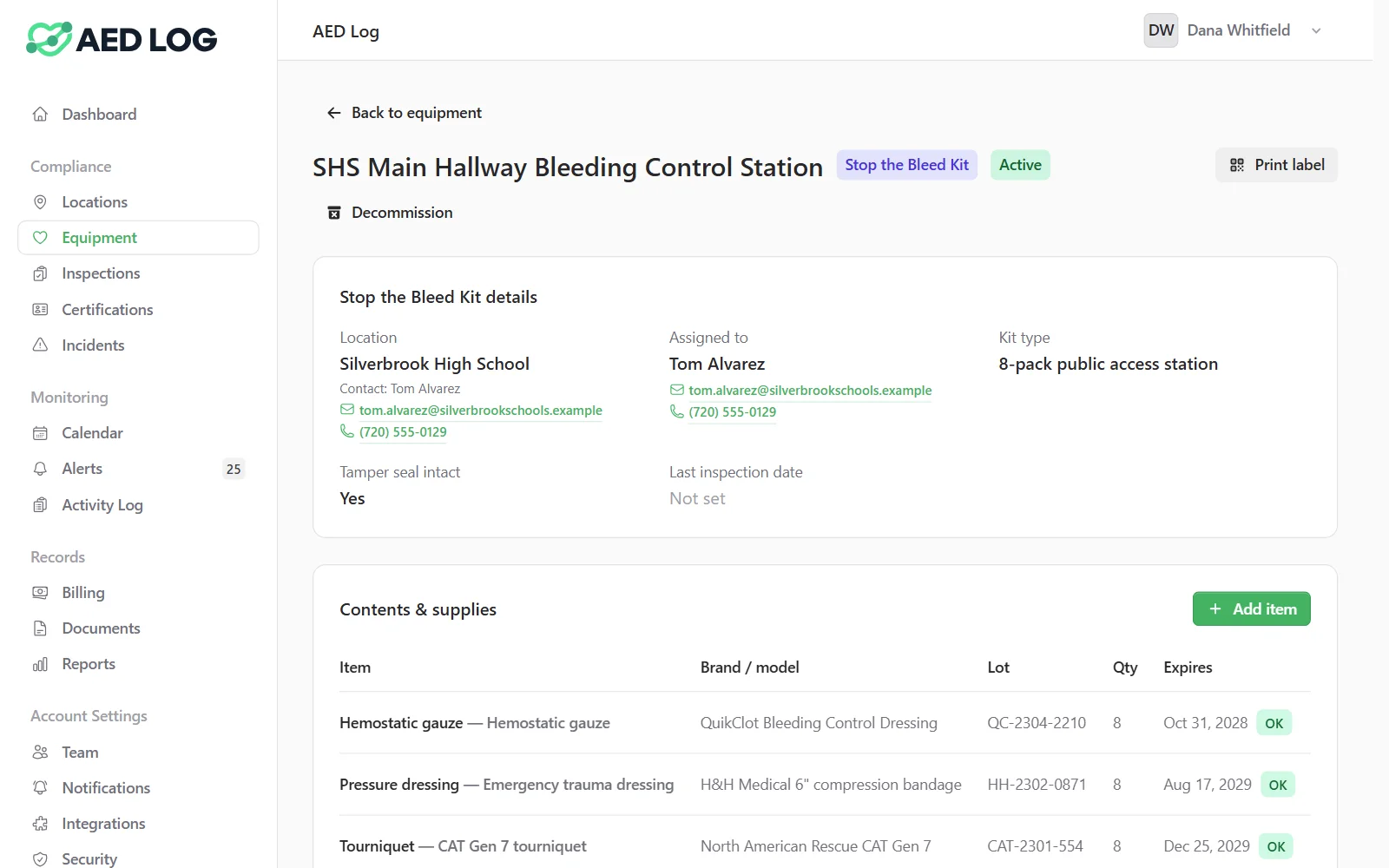
Each kit keeps its type, its tamper seal and every item inside that can expire.

Kit type, from an individual pouch to a multi-kit public access station
Whether the tamper seal is intact
Each tourniquet, hemostatic gauze and pressure dressing, with its lot, quantity and expiration date
Last inspection date
Where it's kept, including in or beside an AED cabinet
An assigned person and a QR label
What's in a Stop the Bleed kit and what expires
Stop the Bleed kit contents usually include at least one tourniquet, hemostatic or plain gauze, a pressure dressing and gloves, and the hemostatic gauze and many dressings carry expiration dates.
Kits vary by maker and size, from an individual pouch to a wall station holding several kits. Check each item's packaging for its date. AED Log records whatever date is printed there, so the gauze gets replaced before it expires, not after it's needed.
Many organizations keep a bleeding control kit in or beside each AED cabinet, so the same person checks both on the same walk-through.
The quarterly Stop the Bleed kit inspection checklist
AED Log's default Stop the Bleed kit checklist runs every quarter:
Tamper seal intact
Tourniquets present and in date (critical)
Hemostatic gauze present and in date (critical)
Pressure dressings present
Kit accessible and clearly marked
Notes, such as what to replace
A failed check opens a corrective action and flags the kit. Administrators can change the questions, or shorten the interval if your program checks kits more often.
Tourniquet, gauze and dressing expiration alerts
Every dated item in a kit warns you before it expires, on the dashboard, the calendar and the alerts.
Because each item is tracked on its own, a kit with in-date tourniquets and expiring gauze shows exactly which item to replace. Archive the old item when you swap it, and its history stays with the kit.
Alerts go to the person assigned to the kit or to everyone at the site, by email or in Slack, Microsoft Teams or Discord. A kit marked Missing raises a critical alert.
Incident reports for bleeding control
When a kit is used, record the response, so it can be reviewed and the kit restocked.
The responder
The nature of the injury
Whether a tourniquet was used
Whether a hemostatic agent was used
Whether EMS was called, and when they arrived
The outcome, with patient details restricted to owners and administrators
Stop the Bleed kit add-on pricing
Stop the Bleed kit tracking is an add-on at $8 per kit per year, on top of your AED plan.
Every account starts with an AED plan, which covers all your AEDs at one flat rate for the tier. Add one license per active kit, and pay only the prorated difference when you add more during the year.
Related: Stop the Bleed kits for schools
School districts that keep bleeding control kits beside their AEDs can track both in one account, building by building. See how AED Log works for schools.
AED programs for schools AED inspection tracking All equipment types
Stop the Bleed kit tracking FAQ
Keep every Stop the Bleed kit ready
Quarterly checks and every tourniquet and gauze date, tracked with your AEDs.
45 days free. No credit card required. Then plans from $114 a year.